
Hotel Housekeeping Checklist: From Checkout to Room Ready

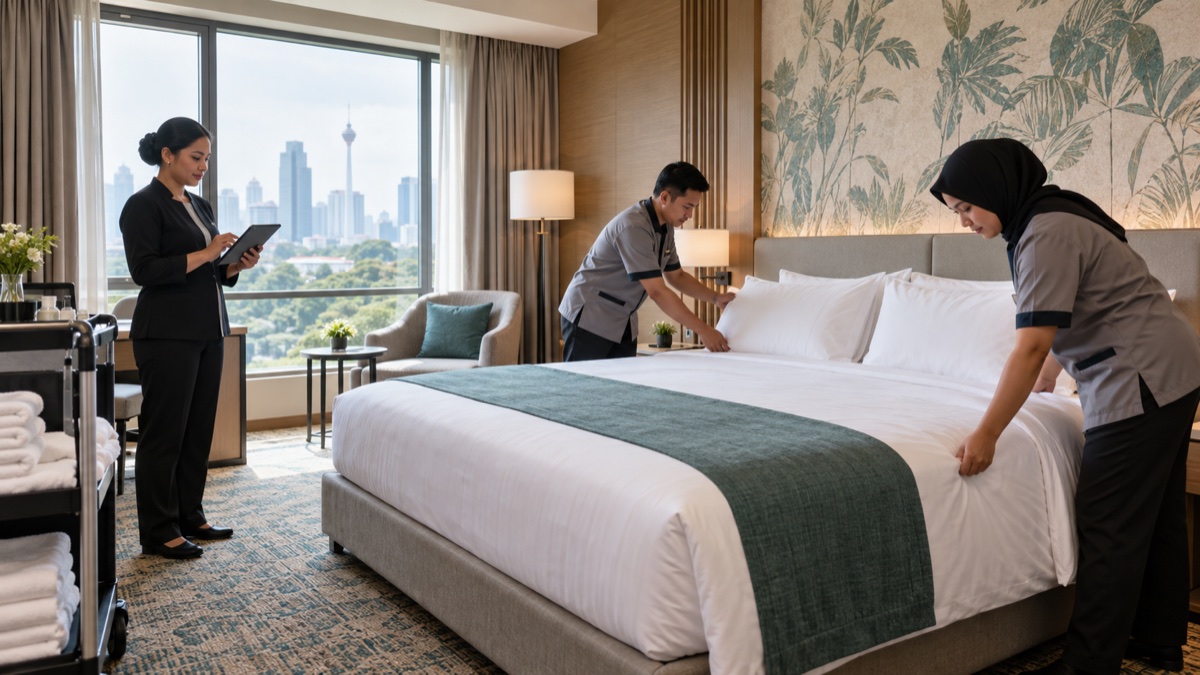
A guest checks out at 11:00. The next guest arrives early at 12:30. Between those two moments, the room must be released, cleaned, inspected and marked ready without the front desk guessing its status.
That requires more than a cleaning list. It requires a shared room-turnover process between the front desk, housekeeping and maintenance.
Start with clear room-status definitions
Every department should use the same status language. A practical set may include:
| Status | Meaning | Who normally updates it |
|---|---|---|
| Occupied | Guest is still registered in the room | Front desk |
| Due out | Guest is expected to leave today | PMS/front desk |
| Vacant dirty | Guest has departed; cleaning is required | Front desk or PMS |
| Cleaning | Attendant is working in the room | Housekeeping |
| Inspected | Cleaning has passed the required check | Supervisor |
| Vacant ready | Room can be assigned to a new guest | Housekeeping/PMS |
| Out of order | Room cannot be sold until repaired | Authorised manager |
Avoid informal labels that mean different things to different shifts. The front desk should never treat “cleaned” as “ready” when a supervisor inspection is required.
1. Release the room after checkout
As soon as checkout is completed, the hotel PMS should show the room as vacant dirty or the equivalent status used by the property.
Before housekeeping enters, confirm:
- The guest has checked out or authorised room access
- Late checkout has not been approved
- The room has not been moved or extended
- Special handling notes are visible
- Lost-property procedures are understood
A live room-status board prevents housekeeping from waiting for paper lists or cleaning a room whose guest has not left.
2. Prioritise the turnover queue
Not every vacant room has the same urgency. Build the cleaning order around arrivals and operational needs.
Prioritise:
- Rooms assigned to waiting or early-arriving guests
- Rooms required for groups with fixed arrival times
- Sold-out room types with no other ready inventory
- Standard arrivals for the day
- Unassigned vacant rooms
- Deep-cleaning and preventive-maintenance rooms
The priority list should update when an arrival time, room assignment or maintenance issue changes. A static morning printout quickly becomes outdated.
3. Complete the room-attendant checklist
Adapt the checklist to the property's room type and standards. A basic departure-room sequence should cover:
Entry and initial check
- Announce entry and follow the hotel's access procedure
- Open curtains and switch on required lights
- Check for guest belongings and report lost property
- Look for damage, smoke, pests or unusual conditions
- Report maintenance issues before hiding them with cleaning
Bed and linen
- Strip used linen and inspect mattress protection
- Check the bed, headboard and surrounding area
- Fit clean linen according to the hotel standard
- Replace stained or damaged items
- Confirm the final bed presentation
Bathroom
- Clean and disinfect the toilet, basin, shower and bath
- Remove hair and residue from drains and surfaces
- Replace towels and approved amenities
- Check water flow, drainage and hot water
- Inspect mirrors, fixtures, sealant and ventilation
Guest room
- Dust high and low surfaces
- Clean frequently touched points
- Empty and clean bins
- Check minibar or chargeable items where applicable
- Test lights, sockets, air conditioning, television and telephone
- Clean floors, edges and under movable furniture
- Set curtains, temperature and furniture to the room standard
Final attendant check
- Confirm the correct number of towels and amenities
- Remove equipment, rubbish and used linen
- Check smell, temperature and overall presentation
- Close and secure doors and windows as required
- Update the room to “cleaning complete” or “inspection required”
Do not mark the room ready if an unresolved defect affects safety, cleanliness or the promised guest experience.
4. Record maintenance instead of working around it
Housekeeping often sees defects first. Give attendants a simple way to report:
- Faulty lights or sockets
- Air-conditioning problems
- Water leaks or slow drains
- Damaged locks, safes or furniture
- Television, telephone or Wi-Fi issues
- Stains, mould or pest evidence
The report should include the room number, problem, time and urgency. A photo can help when permitted by hotel policy.
Management must then decide whether the room can remain in service, needs a quick repair or should be placed out of order. Hiding a problem until the next guest reports it creates a more expensive interruption.
5. Inspect the room before release
Supervisors should inspect consistently instead of relying on a general impression.
Check the room from the guest's point of view:
- Is the first view from the door clean and orderly?
- Are bed linen, towels and bathroom surfaces visibly clean?
- Do lights, air conditioning, water and key equipment work?
- Are amenities complete and correctly placed?
- Is the room free from odour, dust, hair and maintenance debris?
- Have reported defects been resolved or approved?
- Does the final room match the room type sold?
Only then should the status change to vacant ready.
6. Notify the front desk through one system
The front desk needs a current status, not a sequence of chat messages. When housekeeping updates the room inside the PMS or connected mobile view, the receptionist can see which assigned rooms are ready without calling the supervisor.
This is especially valuable when:
- Several guests arrive early
- The hotel is close to full occupancy
- A group requires many rooms at once
- Room moves happen during cleaning
- Maintenance removes a room from inventory
One shared status also creates a record of who changed the room and when.
7. Review the day's exceptions
At the end of the shift, review rooms that took unusually long, failed inspection or remained out of order. Look for repeated causes rather than blaming the last person who touched the room.
Useful operational measures include:
- Rooms completed by the required arrival time
- Average turnover time by room type
- Rooms that failed the first inspection
- Repeated maintenance issues
- Guest complaints linked to cleanliness or room readiness
Use these measures to adjust staffing, training, linen supply and preventive maintenance. They should improve the process, not encourage rushed cleaning.
Room-ready checklist at a glance
- Checkout confirmed
- Room marked vacant dirty
- Cleaning priority assigned
- Lost property and damage checked
- Linen and bathroom completed
- Guest-room surfaces and equipment checked
- Maintenance issues logged
- Amenities and presentation verified
- Supervisor inspection passed
- Room marked vacant ready
- Front desk can see the updated status
One room status, shared by every team
Housekeeping works best when the front desk knows what is happening without interrupting the people preparing rooms. Clear statuses, a consistent checklist and real-time updates turn checkout-to-ready into one controlled workflow.
See how eZee Hotel PMS connects front desk, housekeeping, maintenance and room status, or book a demonstration using your property's current turnover process.