
How Malaysian Hotels Must Prepare for 2027: Technology, A.I & Guest Trends
Malaysia’s hospitality industry is entering a longer and more competitive tourism cycle. With the Visit Malaysia campaign extended to 2027, hotel operators now have more time to prepare, but also more pressure to adapt before the market becomes increasingly crowded.
This was one of the key themes discussed in the first episode of eZee Ma!, a podcast created by eZee Malaysia, aiming to increase the public awareness on Malaysia’s hospitality industry updates, titled “How Malaysian Hotels Must Adapt Before 2027?”.
In this episode, eZee Malaysia’s Managing Director, Mr. Loke, shared his perspective on how Malaysian hoteliers can prepare for the next phase of hospitality, especially as tourism demand continues to recover and guest expectations evolve.
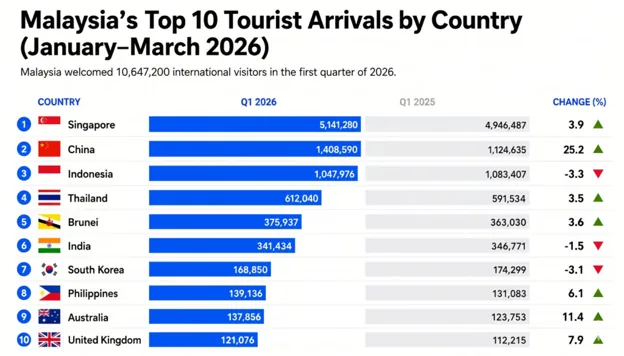
The timing is important. According to UN Tourism, international tourist arrivals reached an estimated 1.52 billion globally in 2025, showing that global travel demand has strongly returned. Malaysia is also extending its Visit Malaysia campaign into 2027, while maintaining targets of 47 million international visitors and RM329 billion in tourism revenue. The momentum is already visible, with Malaysia recording about 10.65 million international visitor arrivals in the first quarter of 2026 alone.
Malaysia recorded 10.65 million international visitor arrivals in Q1 2026, led by Singapore, China, Indonesia, Thailand, and Brunei as the top five source markets. Source: MOTAC / Tourism Malaysia.
For Malaysian hotels, this creates a major opportunity. But opportunity alone is not enough. Hotels need the right systems, the right service strategy, and the right mindset to stay competitive.
Moving from Manual Systems to Cloud-Based Hospitality Technology
For many years, some hotels in Malaysia have continued to rely on legacy on-premise systems. These systems may have worked in the past, but they are becoming less suitable for today’s fast-moving hospitality environment.
In the podcast, Mr. Loke highlighted that hotels need to move towards a more unified and cloud-based way of operating. Instead of managing separate systems for the Property Management System, booking engine, channel manager, point-of-sale, reporting, and guest communication, hotels should consider a more connected ecosystem.
A cloud-based hospitality platform allows hotel teams to manage reservations, rates, availability, guest profiles, payments, and reports in one centralized system. This helps reduce manual work, avoid operational mistakes, and improve visibility across departments.
For hotels preparing for higher tourist arrivals, this is no longer just a technology upgrade. It is part of business readiness.
Guest Expectations Have Changed
Today’s guests are not only looking for a clean room and basic facilities. They are looking for a smooth and complete experience.
The guest journey begins before arrival. It starts when a traveler searches for accommodation online, compares prices, checks reviews, visits the hotel website, and makes a booking. The journey continues through pre-arrival communication, check-in, in-stay service, checkout, and post-stay reviews. This means every touchpoint matters.
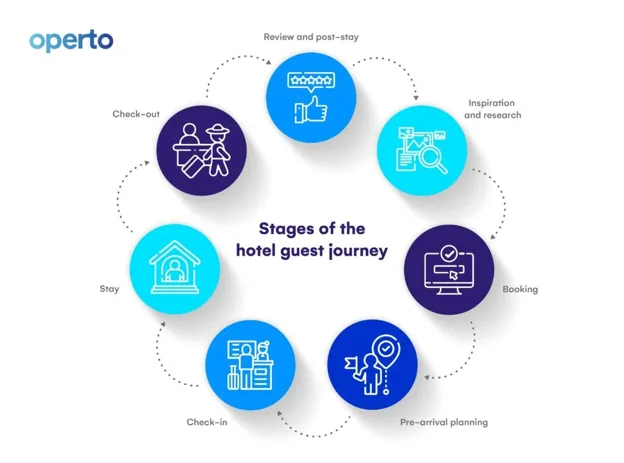
The hotel guest journey covers every stage of the experience, from inspiration and booking to check-in, stay, check-out, and post-stay reviews. Source: Operto.
If communication is slow, information is unclear, or the check-in process is complicated, the guest experience can be affected before the guest even enters the room. On the other hand, when hotels provide fast responses, accurate information, and a seamless process, guests are more likely to feel confident and satisfied.
As discussed in eZee Ma!, modern hospitality is not only about providing accommodation. It is about managing the full guest experience from search to stay and beyond.
A.I Works Best When Hotel Data Is Centralized
Artificial Intelligence is becoming one of the most talked-about topics in hospitality. However, AI is only useful when the data behind it is properly organized.
Mr. Loke explained that if hotel data is scattered across different platforms, AI cannot perform effectively. For example, if booking data, guest communication, room inventory, rates, and reports are stored separately, it becomes difficult for AI to provide meaningful support.
This is why centralized data is important.
When hotel systems are connected, AI can help operators understand guest behavior, monitor market trends, support revenue decisions, respond to routine questions, and improve operational efficiency.
The industry is also moving beyond simple chatbots. The next stage is more intelligent AI support, where systems can assist with a wider range of tasks, such as guest communication, competitor rate checking, reporting, and operational recommendations.
However, AI should not be used just because it is trending. It should be used with a clear purpose: to save time, reduce repetitive work, and help hotel teams make better decisions.
A.I Will Not Replace the Human Touch
One common concern among hospitality operators is whether AI will replace people. In the podcast, Mr. Loke emphasized that the human touch remains essential in hospitality.
Hotels are still people-driven businesses. Guests may enjoy mobile check-in, automated replies, and digital convenience, but they still value genuine human interaction. They still want a friendly welcome, personal recommendations, quick assistance, and empathy when problems happen.
AI should support hotel teams, not replace them.
When used correctly, AI can handle repetitive questions, organize information, and assist with daily operations. This gives hotel staff more time to focus on meaningful guest engagement.
In other words, technology should make hospitality more human, not less human.
Technology Should Be Seen as an Investment, Not an Expense
Another important point from the discussion is how hoteliers should view technology.
A good hospitality system should not be treated only as a monthly cost. It should be seen as a long-term investment that supports business growth, operational efficiency, and service quality.
For example, the right system can help hotels reduce manual errors, prevent overbooking, manage OTA distribution, improve rate control, speed up reporting, and enhance guest communication. These improvements directly affect how efficiently a hotel operates and how guests experience the property.

Just like a hotel invests in renovation, equipment, staff training, or branding, technology is also part of the foundation for long-term competitiveness.
The key is not only to buy software. The key is to work with a trusted hospitality technology and growth partner that understands hotel operations, local market challenges, and future industry direction.
Hotels Should Act Before the Market Becomes Crowded
The extension of the Visit Malaysia campaign gives Malaysian hotels a longer runway. But this also means competition will continue to rise.
More tourists may enter the market, but more properties will also compete for the same demand. Guests will compare hotels more carefully. OTA rankings, online reviews, pricing strategy, digital visibility, and service quality will become even more important.
This is why waiting can be risky.
Mr. Loke’s advice to hotel operators was clear: do not wait until the market becomes too crowded and demanding before taking action.
Hotels should start reviewing their systems, operations, guest journey, digital presence, and revenue strategy now. Properties that prepare earlier will be in a stronger position when demand grows further in 2027.
Final Thoughts
The future of Malaysian hospitality will not be shaped by tourism demand alone. It will be shaped by how well hotels respond to that demand.
The hotels that win in the new era will be the ones that modernize their systems, understand changing guest expectations, use data effectively, and adopt technology without losing the human side of hospitality.
As discussed in the first episode of eZee Ma!, 2027 is not something hotels should wait for. It is something they should prepare for now.
For Malaysian hoteliers, the question is no longer whether technology is necessary.
The real question is: will your hotel be ready before the market moves ahead?
To know more, watch the full episode here: https://youtu.be/szm1E1R7mh8?si=xAkTDpk6gzpSXb1e