
How Malaysian Hotels Can Reduce OTA Commission and Win More Direct Bookings

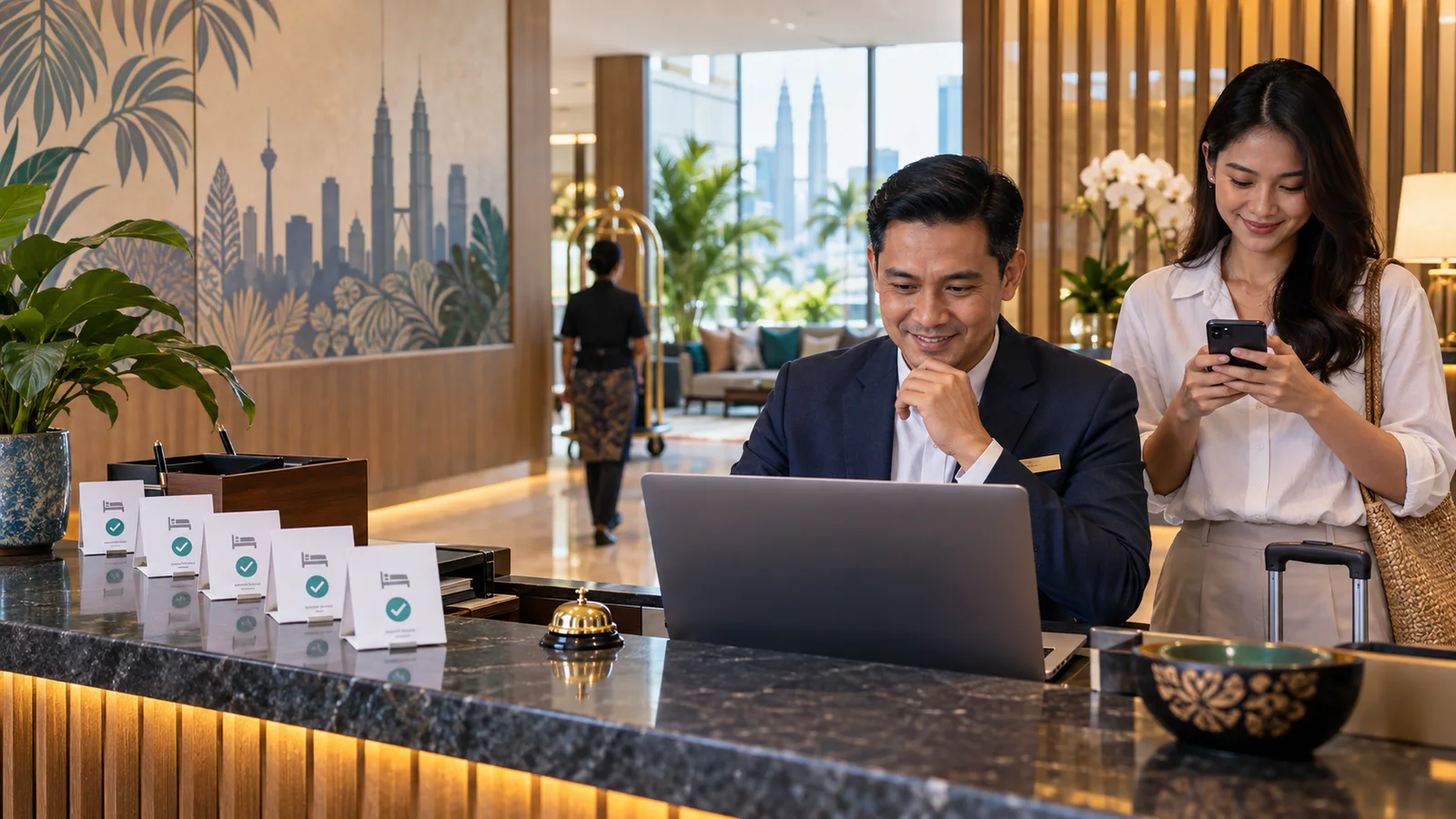
Online travel agencies help guests discover hotels, compare options and book with confidence. The problem begins when nearly every guest, including people who already know your hotel, still completes the reservation through an OTA and generates another commission bill.
The sensible goal is not to leave OTAs. It is to use them for reach while giving guests a clear, reliable way to book directly when they are ready.
The short answer
Malaysian hotels can reduce OTA commission by connecting a mobile friendly booking engine to their website, keeping rates and availability accurate, giving guests a reason to book direct, appearing in Google's free hotel booking links and following up with previous guests.
The booking journey must be measured from the first visit to the confirmed reservation. Otherwise, a hotel may increase website traffic without knowing whether it produced any additional room revenue.
Why OTA dependence deserves attention
OTAs solve a genuine distribution problem. They put independent hotels in front of travellers who may never have discovered the property on their own. Their marketing reach, reviews and booking experience can be valuable, particularly for new guests and international markets.
But the economics change when OTAs also capture:
- Guests searching for the hotel by name
- Repeat guests who have stayed before
- Travellers who already visited the official website
- Local guests who would happily pay through FPX, DuitNow or a card
The Malaysia Competition Commission's review of online travel agencies identified high commission rates and the growing importance of OTAs among the issues affecting accommodation providers. Its market material reported that OTAs represented 32.4% of the Malaysian market examined and that some commission rates had risen as high as 18%.
That does not make every OTA booking unprofitable. It means hotels should understand the cost and decide which demand is worth paying for.
Calculate what OTA commission costs your hotel
Start with your own figures rather than an industry average.
Estimated annual OTA commission:
Rooms × 365 × occupancy × average room rate × OTA share × commission rate
For example, consider a 35-room hotel with:
- 65% annual occupancy
- RM240 average room rate
- 45% of room revenue arriving through OTAs
- An 18% OTA commission rate
The calculation is:
35 × 365 × 65% × RM240 × 45% × 18% = approximately RM161,425
This is an illustrative example, not a benchmark. Replace every figure with data from your PMS and OTA statements. Then calculate what happens if only 10% or 20% of suitable OTA demand moves to the direct channel.
The objective is not to claim that every commission ringgit can be removed. It is to identify how much margin is available if the hotel builds a healthier channel mix.
What counts as a direct booking?
A direct booking is completed with the hotel rather than through a third-party seller. It can arrive through:
- The hotel's website booking engine
- Google hotel booking links
- A telephone or WhatsApp enquiry completed by hotel staff
- Email or a corporate account
- A repeat-guest campaign
- A walk-in reservation
For online growth, the most scalable route is a hotel booking engine connected to the hotel's website, PMS and channel manager. It gives guests live availability, rates and payment options without asking the front desk to re-enter the reservation.
Seven practical ways to increase direct hotel bookings
1. Make the booking engine easy on a phone
Many guests will arrive from Google Maps, social media or a mobile search. The booking flow should make it easy to:
- Select dates and guests
- Compare available rooms
- Understand taxes, inclusions and cancellation terms
- Pay using a familiar method
- Receive an immediate confirmation
Test the entire journey on a normal mobile connection. Small problems such as a date picker covering the screen, an unclear final price or a form asking for unnecessary details can send the guest back to an OTA.
2. Connect one source of rates and inventory
The website cannot win trust if it shows an unavailable room or a different price from the front desk. Connect the booking engine to the hotel PMS and channel manager so direct and OTA reservations use the same inventory.
This also reduces manual work. When a direct reservation arrives, availability can update across the OTAs without staff opening every extranet.
If the roles of these systems are unclear, read our practical guide to how a hotel channel manager works.
3. Give guests a reason to book direct
The direct offer does not always need to be the lowest public rate. Hotels can add value through:
- Flexible cancellation or date changes
- Early check-in or late check-out, subject to availability
- A welcome drink, breakfast or parking benefit
- A room-upgrade priority
- A repeat-guest code
- Clear access to the hotel team when plans change
State the benefit next to the booking button. Do not make guests search through an FAQ to understand why they should book directly.
4. Use Google free booking links
Google allows eligible hotel partners to show an official website rate through free booking links. Travellers can see the hotel's rate in Google Search and Maps and then continue to the hotel's own booking page.
Google states that hotel partners pay no fee for placement or clicks on free booking links. Rates and availability normally need to be supplied through the hotel's booking technology or connectivity partner.
Ask your booking-engine or channel-manager provider:
- Can you send our rates and availability to Google Hotel Center?
- Will the link open the correct room, dates and guest count?
- How is price accuracy monitored?
- Can we identify free-booking-link traffic in analytics?
Google's ranking signals include the value offered, landing-page experience and historical price accuracy. Sending an inaccurate rate simply to appear cheaper is not a sustainable strategy.
5. Improve the official website before buying more traffic
A beautiful homepage does not automatically produce reservations. The site must answer practical questions quickly:
- Where is the hotel located?
- What do the rooms actually look like?
- What is included in the rate?
- Can the guest cancel or change the booking?
- Is payment secure?
- Who can help if there is a problem?
Use recent photography, clear room descriptions, visible policies, maps, reviews and one consistent booking action. Keep the path from the landing page to available rooms short.
6. Build a repeat-guest channel
A previous guest should not need an OTA to find the hotel again. With proper consent and responsible data handling, hotels can use email or WhatsApp to share:
- A returning-guest rate
- Seasonal packages
- Weekday or low-season offers
- Event and school-holiday availability
- A direct link prefilled with the relevant stay dates
The message should be useful and occasional. Repeated generic promotions can damage trust faster than they create bookings.
7. Measure confirmed bookings, not booking-button clicks
A click on “Book now” is not revenue. Track the journey through to a successful reservation.
At minimum, record:
- Traffic source and campaign using UTM parameters
- Booking-engine visits
- Date searches and room selections
- Checkout starts
- Confirmed bookings
- Booking value
- Cancellations
Compare net revenue by channel after commission, payment fees, advertising cost and cancellations. Microsoft Clarity can help reveal where visitors stop or struggle, while analytics and the PMS should confirm whether the reservation was completed.
Booking engine, channel manager and PMS: what is the difference?
| System | Main purpose | Direct-booking role |
|---|---|---|
| Booking engine | Lets guests check rates, book and pay on the hotel's website | Completes the direct reservation |
| Channel manager | Syncs rates and inventory across OTAs and direct channels | Keeps the website inventory aligned with the OTAs |
| Hotel PMS | Runs reservations, front desk, housekeeping, billing and reporting | Receives the booking and manages the guest's stay |
Buying one does not automatically replace the others. The best result comes from a connected workflow where the same room, rate and reservation are not manually recreated in several systems.
A 30-day direct-booking plan
Week 1: measure the current position
- Export 12 months of reservations by source
- Calculate OTA revenue, commission and cancellation rate
- Test the website booking journey on mobile and desktop
- Confirm that conversion tracking fires only after a successful booking
Week 2: remove booking friction
- Correct mismatched rates, room names and availability
- Simplify room descriptions and policies
- Make the booking action visible on every important page
- Test local payment methods and confirmation emails
Week 3: strengthen the direct offer
- Choose one clear direct-booking benefit
- Update Google Business Profile information and photographs
- Ask the connectivity provider about Google free booking links
- Create a previous-guest offer with appropriate consent
Week 4: launch and review
- Add UTM tracking to campaigns and partner links
- Watch real visitor sessions for mobile friction
- Compare booking-engine starts with completed reservations
- Review net revenue by channel rather than website traffic alone
Repeat the review monthly. Direct booking is a distribution programme, not a one-time website project.
Questions to ask a booking-engine provider
During a demonstration, ask the provider to show:
- A complete mobile reservation from dates to confirmation
- How a direct booking enters the PMS
- How inventory changes across connected OTAs
- Which Malaysian payment methods are supported
- How taxes and LHDN e-Invoice fit into the workflow
- How Google booking links are connected and measured
- What happens when payment succeeds but confirmation fails
- Which reports show booking source, value and cancellation
A feature list is less useful than watching one realistic reservation move through the whole operation.
Frequently asked questions
Should a hotel stop using OTAs?
Usually, no. OTAs can be valuable for discovery and demand in markets where the hotel has limited reach. The goal is to decide how much OTA business is profitable and prevent repeat or branded demand from automatically returning through a commissioned channel.
Can a hotel charge less on its own website?
Commercial agreements and rate-parity rules vary, so review the current terms for each channel. Even where the public rate remains the same, the hotel may be able to provide direct value through flexibility, inclusions or loyalty benefits.
Is a booking engine really commission free?
Some providers use a fixed subscription, while others charge per reservation, transaction or module. “Commission free” should mean the provider does not take a percentage of every direct reservation. Payment-gateway charges and software fees may still apply, so request the complete cost structure.
How quickly can direct bookings increase?
There is no responsible universal promise. Results depend on existing brand demand, website traffic, rate competitiveness, guest trust, property reputation and booking experience. Establish the current channel mix first, then measure improvement over several booking cycles.
What should the hotel measure first?
Begin with confirmed direct-booking value, conversion rate and net acquisition cost. Supporting measures such as booking-engine visits, mobile exits and checkout abandonment help explain why the final result changed.
Keep OTA reach, build direct ownership
OTAs and direct bookings do not have to be opposing choices. A healthy hotel distribution strategy uses OTAs to reach new travellers and gives guests a reliable official route when they are ready to book with the property.
Start by calculating the real commission cost, fixing the mobile booking journey and measuring confirmed reservations. Then add Google booking links, repeat-guest campaigns and a direct offer your hotel can deliver consistently.
If you want to see how the website, booking engine, PMS and channel manager can work as one flow, book an eZee demonstration or explore our direct-booking service for Malaysian hotels.
Related reading: The biggest OTA groups in Malaysia · How to improve your OTA listings · What is a hotel channel manager?